2025 National Rural Housing Conference – Heirs’ Property Forum Panel 3
Expanding Capital Access Through Philanthropy & Housing Finance
Rural Homes, Secure Land: An Heirs’ Property Pre-Conference Event
The National Rural Housing Conference took place during the week of November 2, 2025, in Washington, DC. During the conference, the Heirs’ Property forum convened practitioners, researchers, policymakers, community leaders, and funders to explore the multidimensional challenges surrounding heirs’ property.
Across all sessions, the forum revealed that heirs’ property can lead to multidimensional, intergenerational, socio-economic, cultural, and infrastructural challenges. Addressing these requires cross-sector ecosystems, legal, financial, design, philanthropic, governmental, community-based resources, that can meet families where they are, honor their histories, and create durable structures for long-term stability.
Building on this shared understanding, the forum was organized as a pre-conference symposium featuring a series of panels, followed by two workshops during the conference week that examined these themes in greater depth. The following article recap details key takeaways from symposium panel #3.
This article is part of an ongoing conference series. Want to learn more? Explore the full series below.
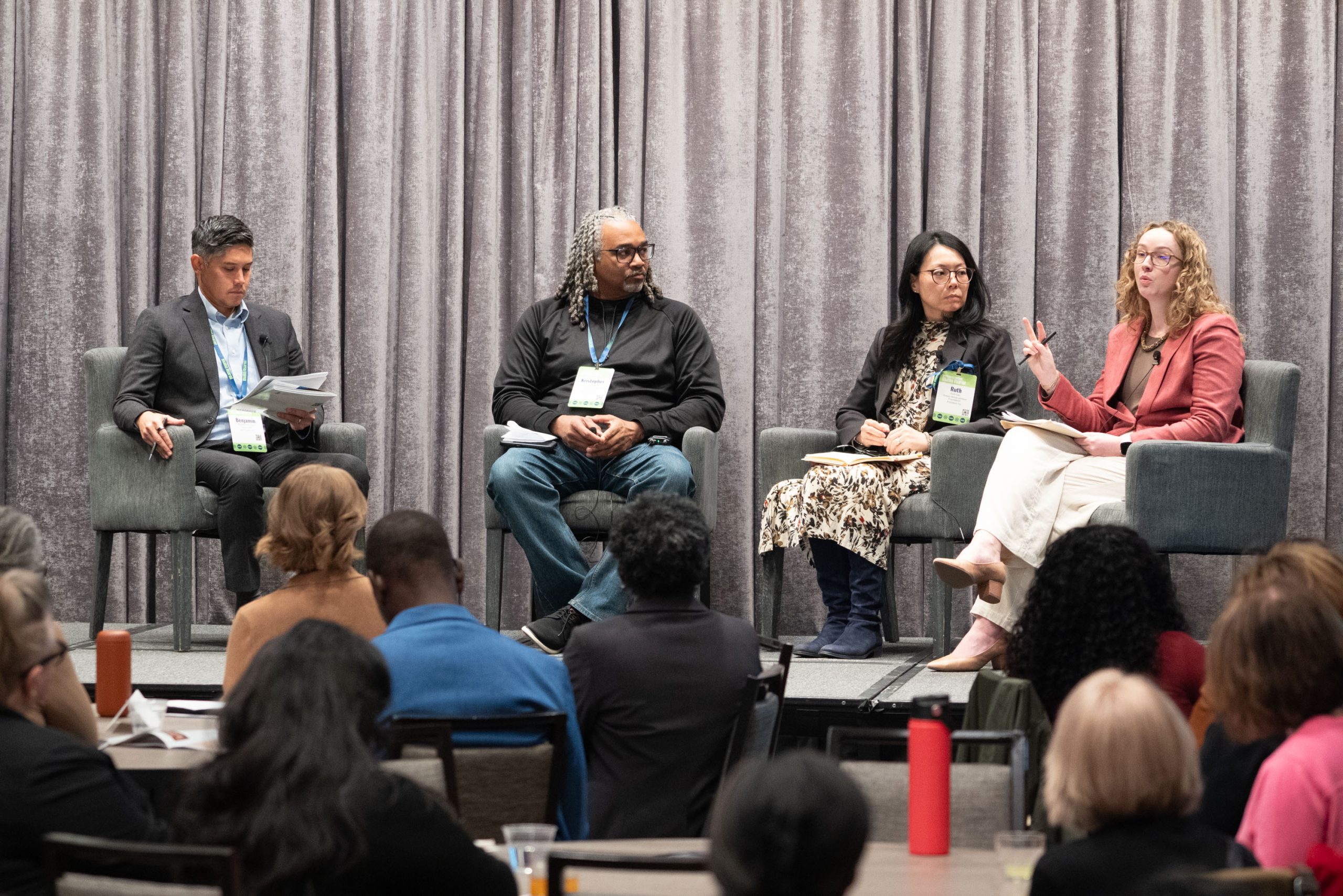
Expanding Capital Access Through Philanthropy & Housing Finance
Panelists:
- Olivia Barrow Strauss, JPMorgan Chase
- Ruth Gao, Robert Wood Johnson Foundation (RWJF)
- Ben Navarro, Fannie Mae
- Kristopher Smith, LISC Jacksonville
Overview
Panel 3 explored how capital, philanthropy, and housing finance infrastructure intersect with heirs’ property. Speakers from JPMorgan Chase, RWJF, LISC Jacksonville, and Fannie Mae discussed why families cannot access equity, why legal resolution often requires upfront capital, and how philanthropy can de-risk or catalyze innovative products. The panel clarified fundamental misunderstandings about what institutions like Fannie Mae actually do and identified persistent gaps in underwriting, probate funding, market access, and racial loan disparities.
Detailed Recap
1. Setting the Stage: What Roles Fannie Mae Plays
Ben Navarro opened with a foundational clarification: “Fannie Mae exists to support mortgage lending… It facilitates the secondary mortgage market; it is not a mortgage lender.” He elaborated that “It never chooses a loan… It finds investors who buy those securities, and Fannie Mae guarantees that those securities will be paid.” This distinction matters because many heirs’ property owners believe Fannie Mae can lend directly to them; it cannot. It can only enable lenders to lend. Navarro emphasized that heirs’ property owners represent a potential market: “These are folks who… have been locked out of the finance system… We can find opportunities to serve [them].”
2. Structural Barriers and Racial Loan Gaps
RWJF’s Ruth Gao explained the foundation’s evolving strategy: “Impact investments are a portion of RWJF funding… post-pandemic we are looking at why there is a racial loan gap and what RWJF can do to address it.” RWJF is exploring guarantees that reduce perceived lender risk, encourage CDFIs to lend, and make small-dollar or complex-title products feasible. This expands the field beyond grants and into capital-market interventions.
3. JPMorgan Chase: Community Grounding & Large-Scale Funding
Olivia Barrow-Strauss from JPMorgan Chase emphasized a community-embedded approach: “Our work is only as strong as the community we serve.” They launched a major philanthropic project in “October 2023… an earnest philanthropic project for heirs’ property.” The initiative includes direct service, research and evidence-building, and collaboration with local organizations such as LISC Jacksonville. The film Gaining Ground was cited as an important narrative catalyst.
4. LISC Jacksonville: Meeting Ever-Changing Community Conditions
LISC Jacksonville’s Kristopher Smith described their work as the ability “to adjust to the ever-changing nature of conditions communities face.” This adaptability is essential because heirs’ property situations can shift rapidly due to family conflict, tax sales, natural disasters, and predatory actors.
5. Need for Probate Capital & Ownership Consolidation Funding
Panelists repeatedly emphasized a severe capital gap: “Housing Finance Associations (HFAs) need actual capital for probate and working with families to consolidate ownership.” Legal resolution often requires attorney fees, surveys, genealogical research, and court costs; upfront expenses that heirs typically cannot afford, despite being land-rich but cash-poor.
6. The Capital Continuum
The panel introduced a major conceptual contribution: the “capital continuum:” a progression from seed funding, to programmatic land capital, to market impact. This progression moves from philanthropic risk-taking, to sustained operational models, to mainstream mortgage products. In many states, heirs’ property funding remains stuck at the earliest stage.
7. Mortgage Readiness & Tailored Products
Panelists stressed that “Not everyone is mortgage ready, but some heirs’ property owners could benefit from a path of homeownership through mortgage.” Solutions must therefore include small-dollar mortgages, tax lien relief, fractional-share products, and renovation financing, tools that match the realities of tangled title households.
8. Innovative Products & Emerging Models
Several innovations surfaced in the discussion: fractional-share homeowner products, small-loan models, creative underwriting, sister city models for urban-rural investment, and grant products for tax debt. As Kristopher Smith said, “If tax debt is the issue… there needs to be a grant product… in Florida there is a product that builds confidence and prevents tax foreclosure.” This highlights the potential for stabilization of capital.
9. Protecting Rural Economies & Preventing Predatory Lending
Panelists asked, “How do we protect the collateral base of rural economies? How do we protect from predatory lenders?” Predatory actors exploit fractional ownership, tax delinquency, disaster-related confusion, and elder heirs. This reinforces the call for creative underwriting.
10. Tracking Philanthropic Impact
A persistent barrier to progress is the lack of data. Data gaps make it difficult to scale solutions, measure returns on investment, coordinate funders, or build evidence for policy change.
Key Takeaways
- Fannie Mae facilitates secondary mortgage markets; it does not make direct loans.
- Heirs’ property owners have been locked out of the mainstream financial system, creating opportunities for targeted products.
- RWJF is using impact investments and exploring guarantee structures to reduce racial loan gaps.
- JPMorgan Chase launched a major heirs’ property initiative in October 2023 (focused on direct service, research, and collaboration).
- LISC Jacksonville adapts work to rapidly changing community conditions.
- HFAs need capital, not just technical assistance, to pay for probate and ownership consolidation.
- Philanthropic seed funding is crucial for experimentation.
- The “capital continuum” reframes the field from grants to program capital to market integration.
- Tailored products (small-dollar mortgages, tax lien grants, and fractional-share loans) are essential.
- Predatory lending risk intensifies in rural areas and disaster contexts.
- Data and philanthropy tracking remain major missing pieces to the heirs’ property field.
“Our work is only as strong as the community we serve.” – Olivia Barrow Strauss

Stay tuned, in the coming weeks, we will be sharing more conference highlights.
Compiled and written by Odia Kaba, Research Fellow