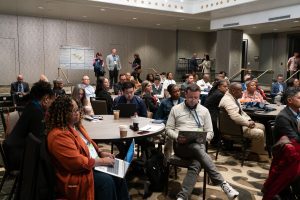
2025 National Rural Housing Conference – Heirs’ Property Forum Panel 1
Evolution of the Heirs’ Property Movement
Rural Homes, Secure Land: An Heirs’ Property Pre-Conference Event
The National Rural Housing Conference took place during the week of November 2, 2025, in Washington, DC. During the conference, the Heirs’ Property forum convened practitioners, researchers, policymakers, community leaders, and funders to explore the multidimensional challenges surrounding heirs’ property.
Across all sessions, the forum revealed that heirs’ property can lead to multidimensional, intergenerational, socio-economic, cultural, and infrastructural challenges. Addressing these requires cross-sector ecosystems, including legal, financial, design, philanthropic, governmental, and community-based resources, that can meet families where they are, honor their histories, and create durable structures for long-term stability.
Building on this shared understanding, the forum was organized as a pre-conference symposium featuring a series of panels, followed by two workshops during the conference week that examined these themes in greater depth. The following article recap details key takeaways from symposium panel #1.
This article is part of an ongoing conference series. Want to learn more? Explore the full series below.
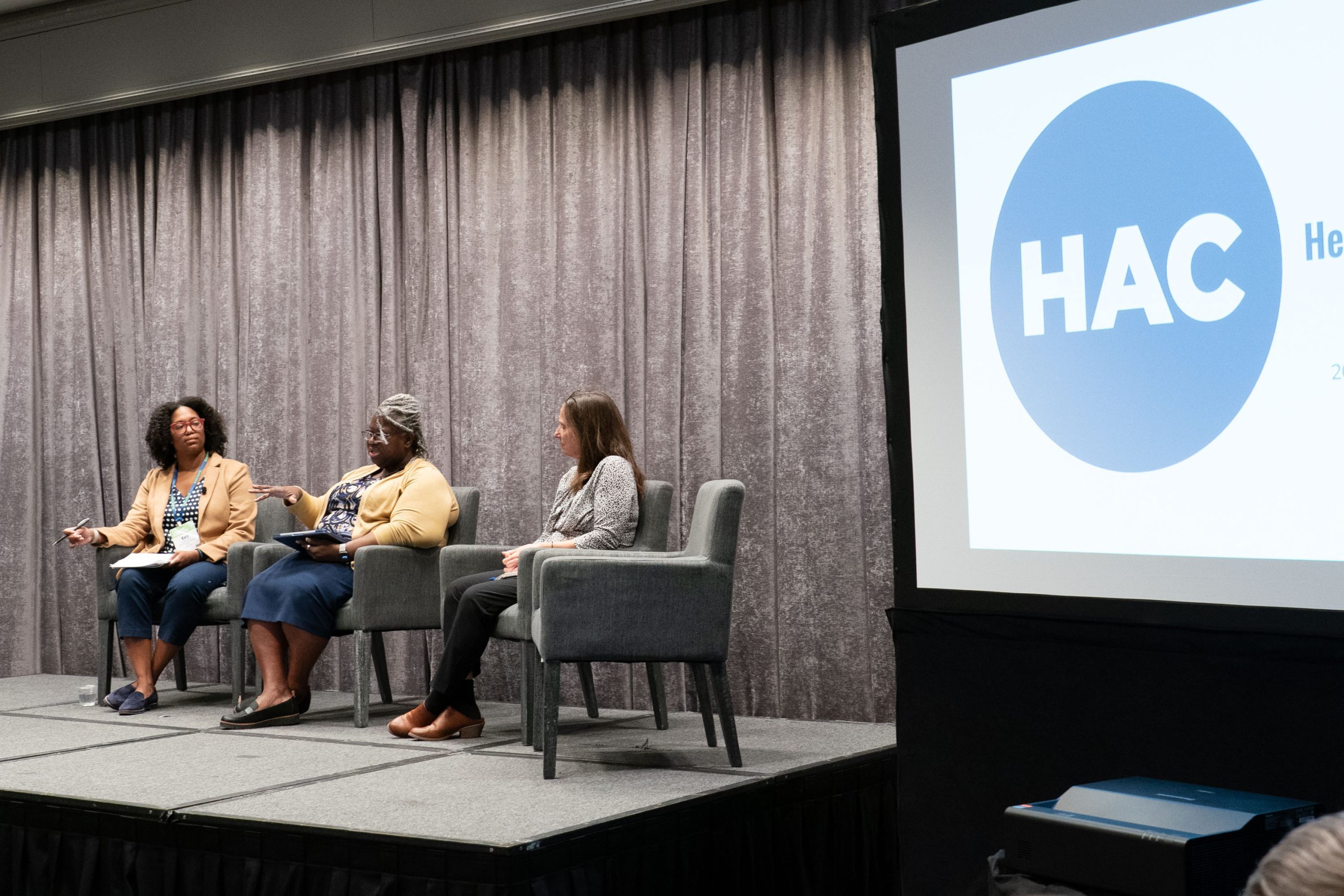
Evolution of the Heirs’ Property Movement
Panelists:
- Francine Miller, Vermont Law and Graduate School, and Heirs’ Property Practitioner Network
- Dr. Jennie Stephens, Center for Heirs’ Property
- Dr. Kara Woods, Alcorn State University, National Policy Research Center
Overview
Panel 1 traced the historical development, professionalization, and evolution of heirs’ property work across the U.S. South and beyond. The discussion highlighted the diverse origins of panelists’ work, major turning points, the importance of collaboration networks, and the continued role of education, ethics, community grounding, and policy alignment. The panel provides the foundational context for all subsequent sessions: how the field formed, where it is today, and what future infrastructure is needed.
Detailed Recap
1. Origin Stories: How Each Leader Entered the Field
The panel opened with a grounding question: “What is your origin story for heirs’ property work?” Dr. Jennie Stephens began by recalling the Ford Foundation’s directive: “Urban organizations were urged to look at rural housing… in the field many people owned property ‘but…’ and the ‘but’ was heirs’ property.” The unexplained title complications revealed widespread generational land fragmentation that had previously been overlooked by large institutions. Stephens also cautioned against harmful data practices, a concept that surfaced repeatedly: mapping heirs’ parcels without context creates exploitation risks.
Francine Miller described Vermont Law’s long-standing commitment to land access and farmer transition work and detailed the infrastructure-building role of the Heirs’ Property Practitioner Network (HPPN), including regular national convenings, monthly PD sessions, peer-to-peer retreats, and state-level fact sheets about heirs’ property policies.
Dr. Kara Woods highlighted her academic focus: “Dissertation on heirs’ property; funded five research projects on the topic.” She noted the generational dimension, “Heirs’ property changes communities across generations,” and announced a key upcoming tool: “Ethics Toolkit to premiere in 2026.”
2. Major Turning Points in the Field
Panelists identified several pivotal developments that shaped the contemporary landscape. One was the Farm Bill inclusion, which Stephens mentioned. Legal licensing limitations led to replication programs.
Another transformative moment was the Sustainable Forestry Program, “a turning point… national partnership plus local work plus research elevated the field.” It tied land retention to economic opportunity, shifting the narrative from loss to empowerment.
Education also emerged as an essential service: “Education is the most important service because people need to understand concepts and consequences.” Without that grounding, legal victories remain fragile.
3. Systemic Issues: Racial Justice, Mislabeling & Public Perception
Panelists warned against superficial framing:
“Heirs’ property has been mislabeled as DEI; it is a racial justice issue, but also more than that.”
This distinction matters: DEI can be performative, while heirs’ property reflects:
- Racial wealth extraction
- Legal disenfranchisement
- Intergenerational land vulnerability
4. Ethics, Community Grounding, and Avoiding Harm
Woods and Stephens emphasized ethical practice: “Organizations should not start without understanding existing community work and how to build alongside it.”
They urged practitioners to ask:
- Will our actions harm vulnerable heirs?
- Are we sharing sensitive land data?
- Are we aligning with community leaders or duplicating work?
- How will the actions impact heirs’ property owners, even if well intentioned?
5. Policy, Practice, and Future Directions
A key recurring solution was estate planning as prevention: “Fund estate planning alongside mortgage signing.” Estate planning is preventative infrastructure, not an afterthought.
Another insight was the need to bridge rural and urban issues: “Consider both rural and urban housing issues together.” Urban heirs face gentrification, tax foreclosure, and developer pressure, making heirs’ property a cross-geography challenge.
Panelists also pointed to the UPHPA, noting during Q&A that “tangible positive results exist… but funding gaps remain.”
Lastly, they highlighted an important distinction between title resolution and preservation: “Resolving heirs’ property is not just about clearing the title, it’s also about preserving titles.” This reframes resolution as protection rather than commodification.
Key Takeaways
- Heirs’ property work emerged from rural housing, land loss prevention, agricultural transitions, and academic research.
- The Farm Bill, Sustainable Forestry Program, and HPPN were major developments in the field.
- Education is an important service; legal fixes alone are insufficient.
- Ethical practice requires protecting landowners’ privacy, honoring existing community work, and avoiding extraction.
- Estate planning must be integrated as prevention, not an optional add-on.
- Title preservation is as important as title clearing.
- UPHPA implementation shows promise, but funding gaps remain.
“Resolving heirs’ property is not just about clearing the title… it’s about preserving titles.” - Dr. Jennie Stephens

Stay tuned, in the coming weeks, we will be sharing more conference highlights.
Compiled and written by Odia Kaba, Research Fellow