2025 National Rural Housing Conference – Heirs’ Property Forum Panel 2
Collectively Living on Rural Land
Rural Homes, Secure Land: An Heirs’ Property Pre-Conference Event
The National Rural Housing Conference took place during the week of November 2, 2025, in Washington, DC. During the conference, the Heirs’ Property forum convened practitioners, researchers, policymakers, community leaders, and funders to explore the multidimensional challenges surrounding heirs’ property.
Across all sessions, the forum revealed that heirs’ property can lead to multidimensional, intergenerational, socio-economic, cultural, and infrastructural challenges. Addressing these requires cross-sector ecosystems, legal, financial, design, philanthropic, governmental, and community-based resources, that can meet families where they are, honor their histories, and create durable structures for long-term stability.
Building on this shared understanding, the forum was organized as a pre-conference symposium featuring a series of panels, followed by two workshops during the conference week that examined these themes in greater depth. The following article recap details key takeaways from symposium panel #2.
This article is part of an ongoing conference series. Want to learn more? Explore the full series below.
Collectively Living on Rural Land
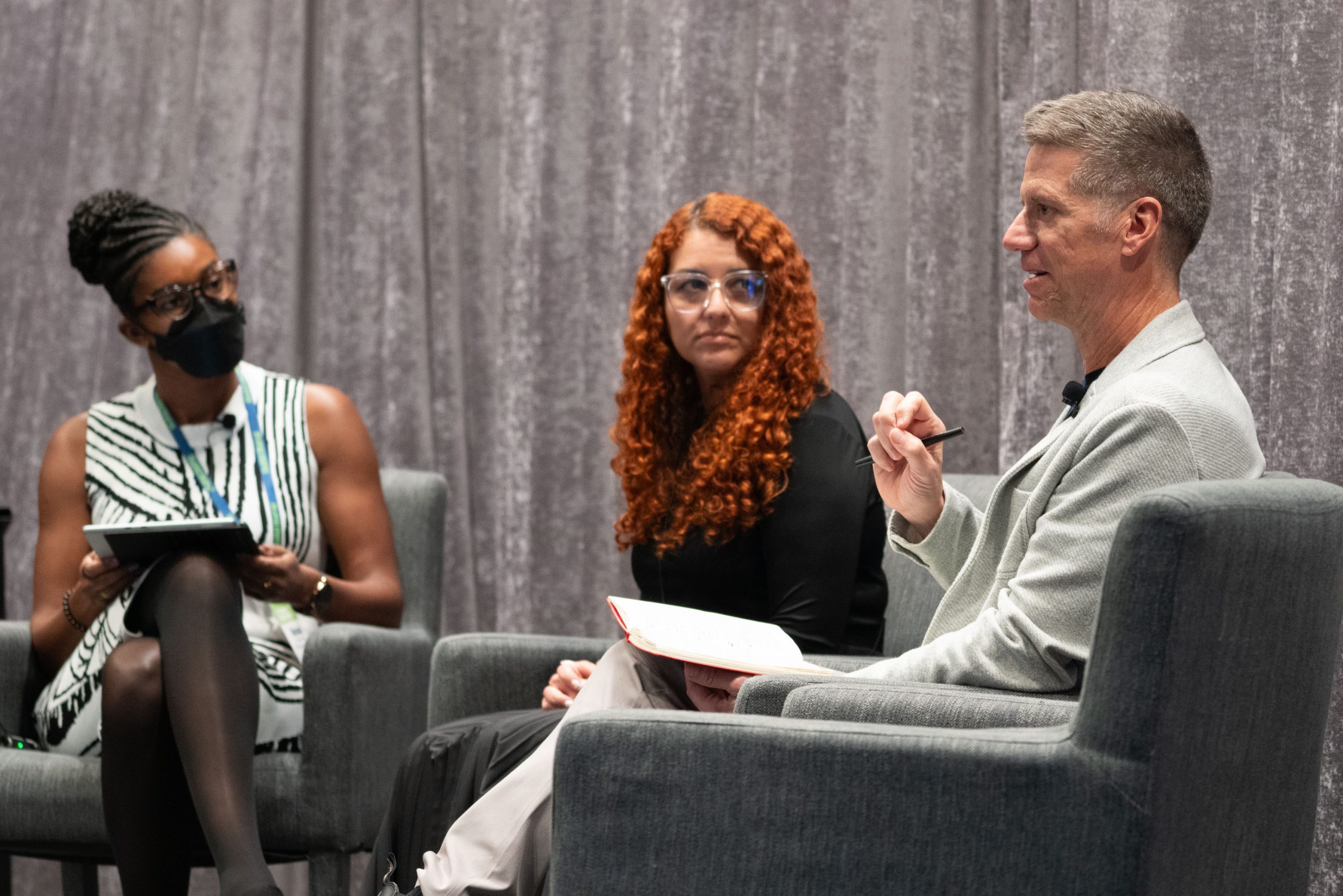
Panelists:
- Alicia Díaz Santiago, Centro para la Reconstrucción del Hábitat
- Rusty Smith, Auburn University, Rural Studio
- Natasha Moodie, Senior Research Associate, Housing Assistance Council
Overview
This session reframed heirs’ property not as a legal anomaly, but as an expression of community continuity, resilience, and inherited land stewardship.
Panel 2 explored the diverse ways rural communities, especially in Puerto Rico and the U.S. South, hold and inhabit land. The conversation emphasized how families informally subdivide and manage property, why collective living is often intentional rather than accidental, and how environmental, administrative, and historical challenges shape housing stability.
Detailed Recap
1. Land Tenure in Puerto Rico and the Rural South
The panel opened by highlighting the diversity of rural landholding traditions: “Rural America is diverse, and so is the way land is held and passed down.” Panelists noted that, unlike in policy and legal circles, community members rarely use terms such as “heirs’ property” or “tangled title.” Instead, “Heirs’ property and tangled titles are practitioner terms… families use ‘our’ and ‘shared.’” This underscores a fundamental insight: legal terminology does not reflect lived experience.
2. Widespread Informal Land Occupancy
Across Puerto Rico and many rural communities, “many heirs live on land informally.” Families often rely on oral history, family structure, and internal agreements instead of recorded deeds or surveys. Panelists noted that “Families often lack formal legal descriptions but have internal systems for dividing property,” and that these systems can be highly organized and functional even without legal documentation.
3. Shared Land as a Strength – Not a Sign of Ignorance
One of the most powerful views of the panel was the assertion that “Shared ownership is seen as strength… binding families, promoting resilience and continuity. The misconception is families are ‘ignorant’, the reality is intentional co-ownership decisions.” This challenges the stereotype that tangled titles result from neglect; for many families, co-ownership is an intentional strategy to maintain proximity, care networks, and cultural continuity.
4. Historical Trauma and Loss of Records
Panelists emphasized that loss of documentation in Puerto Rico is deeply rooted in colonial and environmental history: “Colonial history means much information is lost; family structure and oral history are critical for context.” Disasters worsen these issues: “Hurricanes cause major devastation, records loss prevents access to FEMA aid”, and recovery can be long and grueling. These conditions make formalizing land ownership uniquely complex.
5. Community-Based Work in Puerto Rico
Alicia Díaz Santiago described how her organization works on vacant and abandoned properties to give homes to families in need. Her remarks highlighted deep community distrust of government, extreme need for brick-and-mortar resources rather than just capacity-building, and a desire for emergency funds and basic responsiveness. As summarized: “Community aspirations include having access to emergency funds and having a voice.”
6. Collective Living in Alabama (Rural Studio)
Rusty Smith discussed Auburn University’s Rural Studio, explaining that the “program operates like a study abroad… students live and work in the community.” Its Front Porch Initiative extends this model nationally: “Front Porch Initiative shares housing design knowledge nationally; we’ve worked with 30+ partners in 15 states.” When asked what enabled Rural Studio’s success, Smith emphasized humility and long-term commitment: “Do what you can when no one’s watching, and bring young people along.”
7. ‘Third Space’ Work – When Legal Resolution Is Not Possible
The panel introduced an important conceptual frame: “Prevention, resolution, and the ‘third space’: when you can’t resolve, still act to support families.” This third space includes mediation, temporary use of agreements, documentation assistance, and stabilization without title clearing, expanding the field beyond traditional legal services.
8. Mediation as a Core Tool
Panelists stressed that “mediation is crucial, heirs’ property issues are often family issues, not just legal ones.” The theme reinforces that sustainable solutions require working through family dynamics, not only addressing legal documentation.
9. Systemic Barriers & Data Gaps
Puerto Rico faces severe data limitations. Ther is a need for inclusive data on Latino communities. The absence of reliable demographic and property data affects disaster relief, philanthropic investment, housing policy, and lending eligibility, creating major barriers for families seeking assistance.
10. The Work Ahead
Panelists collectively emphasized the need for more brick-and-mortar investments, real infrastructure and housing stock, reduced regulatory barriers for local lawyers, and greater cross-disciplinary innovation between architecture, law, and policy. They closed with a core principle shaping future work: “Clear titles as a beginning, not the end.”
Key Takeaways
- Families often manage land collectively through intentional, culturally rooted systems.
- Informal property subdivisions are often functional, even without formal deeds.
- Puerto Rico faces extreme structural barriers: lost records, repeated hurricanes, and long-term outages.
- Brick-and-mortar investments are urgently needed.
- Mediation is as essential as legal services.
- Collective living should be recognized as a valid land tenure system, not a deficiency.
- Legal resolution is not always possible, but work can stabilize families in the “third space.”
“Do what you can when no one’s watching, and bring young people along.” - Rusty Smith

Stay tuned, in the coming weeks, we will be sharing more conference highlights.
Compiled and written by Odia Kaba, Research Fellow